what causes rose bush stems to turn black

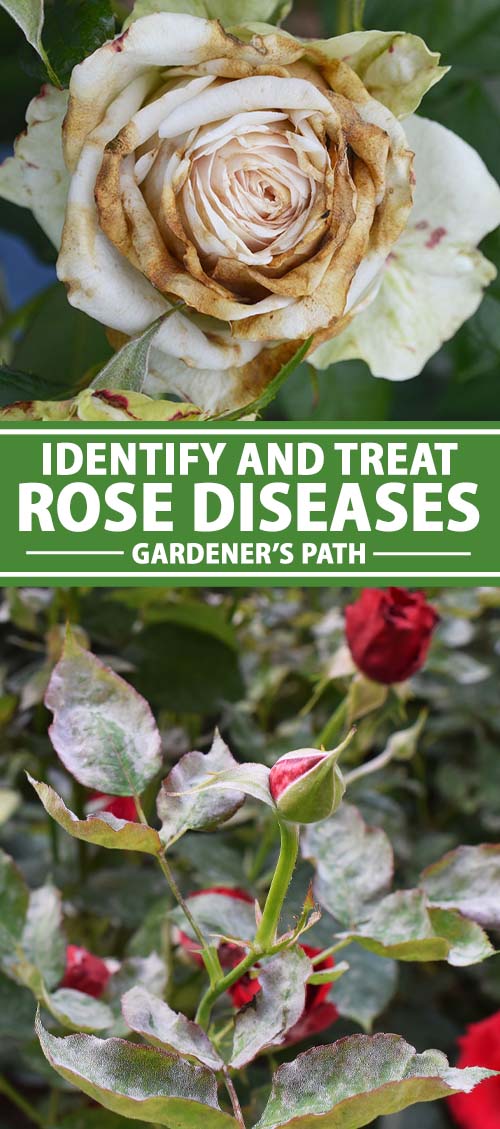
By the end of every fall I find myself swearing off roses. Only at the beginning of every summertime to follow, they suck me back in.
The hope of gorgeous flowers and carpets of petals, and the delectably ho-hum art of pruning, makes the headaches over diseases that usually affect these plants tolerable.
At least until the end of autumn, that is. And then I give up on them again.
Merely such is the life of the gardener.
We link to vendors to assist you find relevant products. If you buy from ane of our links, we may earn a committee .
Few plants in the garden offering the refined payout that roses do. From their iconic flowers to their euphoric aromas, roses are a mainstay for a reason.
Just this comes at the cost of requiring lots of attention to item in terms of plant wellness and care.
If you lot grow roses, you lot're nearly guaranteed to encounter disease.
Seasoned experts and eager amateurs akin are going to encounter black spot, mosaic, and mildew growing on their roses at one point or some other.

Let'south accept a wait at these common and likely issues you'll discover, and learn how to accost them. But first, we'll go over a few nuts on disease prevention.
Here'southward an overview of what I'll encompass:
What Yous'll Acquire
- Tips for Preventing Disease
- Rose Diseases
- Black Spot
- Rust
- Powdery Mildew
- Botrytis Blight
- Cankers
- Crown Gall
- Rose Rosette
Tips for Preventing Affliction
Roses want full sun conditions and lots of airflow. They besides thrive on being doted on, so regular pruning and removal of expressionless tissue will help minimize the risk of affliction.
Hey, roses are a lot like us, aren't they?

Effort planting disease-resistant cultivars to start with, to reduce the likelihood of infectious encounters.
I have never been a fan of Knock Out® Roses myself, but they are a popular series considering they are generally highly resistant to disease.
Chemical Solutions
Ever follow the directions on the label of any chemic solution y'all use in your garden!
Too much or too loftier of a dosage is merely equally bad, or sometimes many times worse, than applying besides pocket-sized of a dosage. Always refer to the label when using any chemical.
On the same note, if you discover a strange tip on the internet or in conversation with a fellow gardener, do a little research before following through with it.
As much as I'm a fan of one-time schoolhouse gardening techniques, I discover besides much of this is fluffy nonsense.
Keep Those Pruners Clean 'due north' Sharp
I acuminate my pruners every single morn, and if I'm doing a lot of snipping, I'll bring the whetstone with me to the jobsite.
A sharp blade makes a clean cutting, and clean cuts minimize damage to a plant while simultaneously helping to prevent infections.
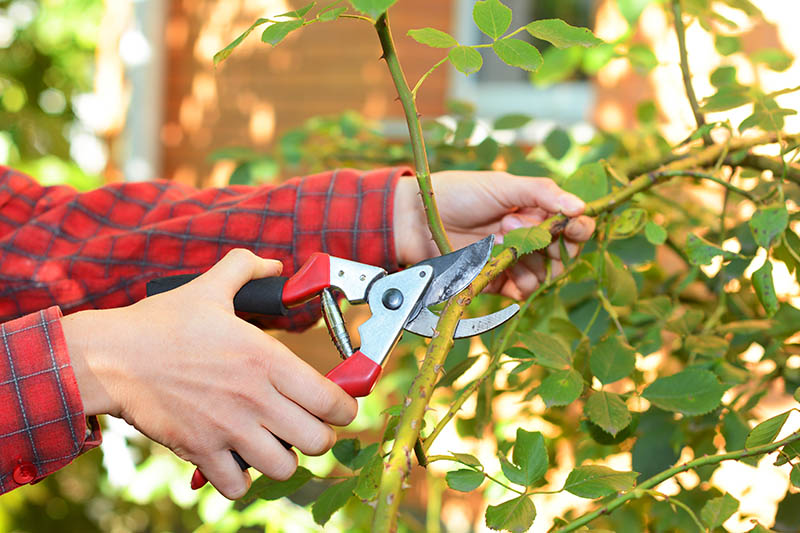
Many rose diseases hands spread to other plants, frequently from a gardener's pruners.
I comport a spray bottle filled with rubbing alcohol and spritz my pruners betwixt every plant I prune, or sometimes between every few cuts on the same plant.
Information technology'southward wearisome and annoying, but information technology's vital to found health.
Rose Diseases
These are some of the more common rose diseases the dwelling gardener will run across.
I've listed them in ascending gild of severity, with the really nasty ones at the end.
Blackness Spot
One of the most common rose diseases you'll encounter is black spot.
Caused past the fungus Diplocarpon rosae, blackness spot will defoliate and weaken your plants, making them more vulnerable to other environmental pressures.
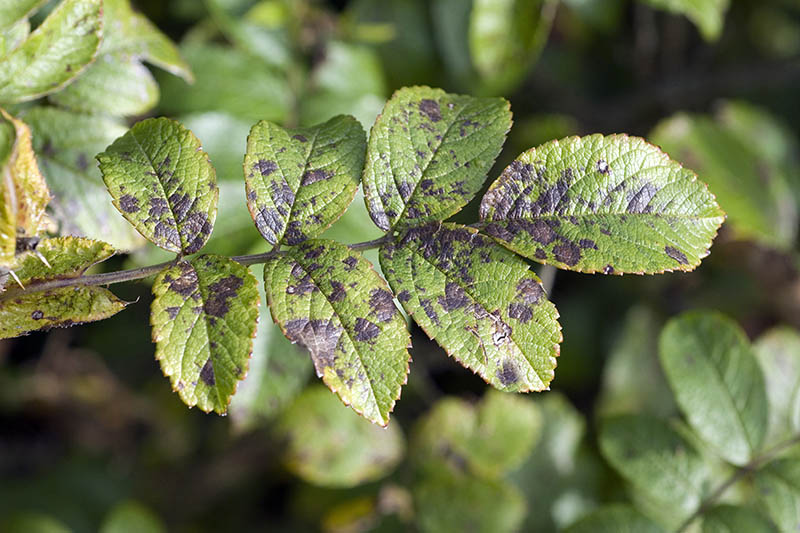
Call back of black spot every bit a gateway illness; it is unlikely to kill your roses by itself, but it stresses your plants and makes them more susceptible to other infections.
This fungal outcome is often encountered in the jump and fall, when atmospheric condition are wet and cool nights forestall moisture from evaporating.
Warm conditions over about 80°F/26°C tends to prevent black spot from occurring in the first place, and dry out weather inhibits the progress of this affliction.
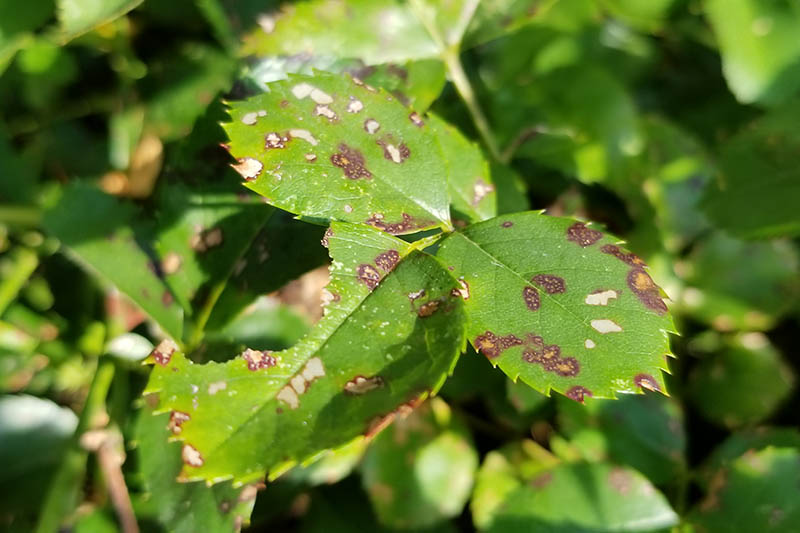
Water splashing on infected leaves is what spreads the fungus, so a lack of atmospheric precipitation and unnecessary irrigation means minimal spread of infection!
Blackness spot often begins its damage at the base of the institute and works its way to the top.
Infected leaves will develop a telling bunch of blackness spots before the establish drops these leaves.
Infected canes will look bruised and take on a black or imperial hue, indicating the presence of infection.
The fungus overwinters in infected leaves and canes, and so if your plants have it one twelvemonth, it's likely to make an advent once more in the hereafter.
How to Handle Black Spot
Blackness spot tin can exist treated with a few different types of sprays. However, this is a very difficult disease to handle once an infection sets in, so early care is vital.
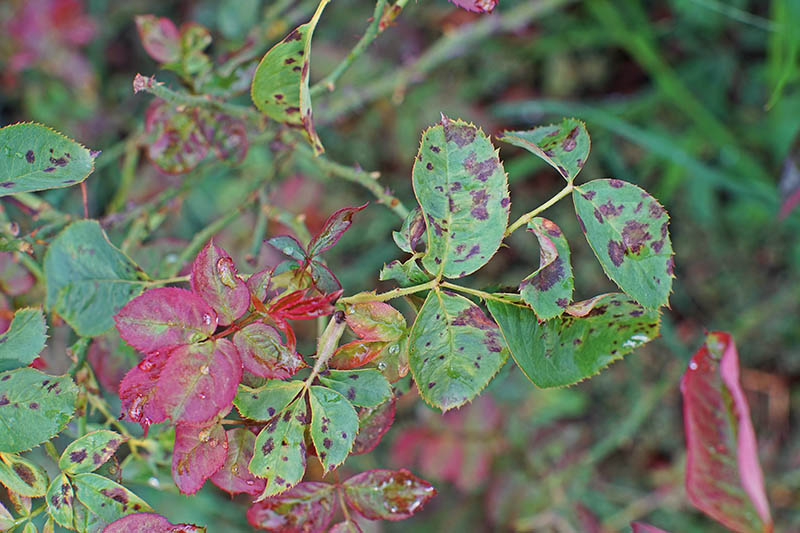
A mixture of most a teaspoon of blistering soda with a quart of warm water can exist sprayed on the plants, or you can use a sulfur-based fungicidal spray.
I started using this product from Southern Ag last fall, and found the results promising. It'south available on Amazon.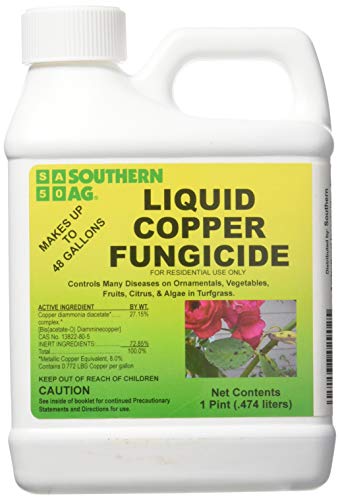
Liquid Copper Fungicide
Neem oil tin can too work, only I tend to avoid it when working with roses to preclude causing impairment to beneficial insects.
Rust
A common problem caused by 9 different species of fungus, at its most beneficial, rust is an ugly status.
Only in the worst cases, information technology will kill the initial host plant and spread to the others.
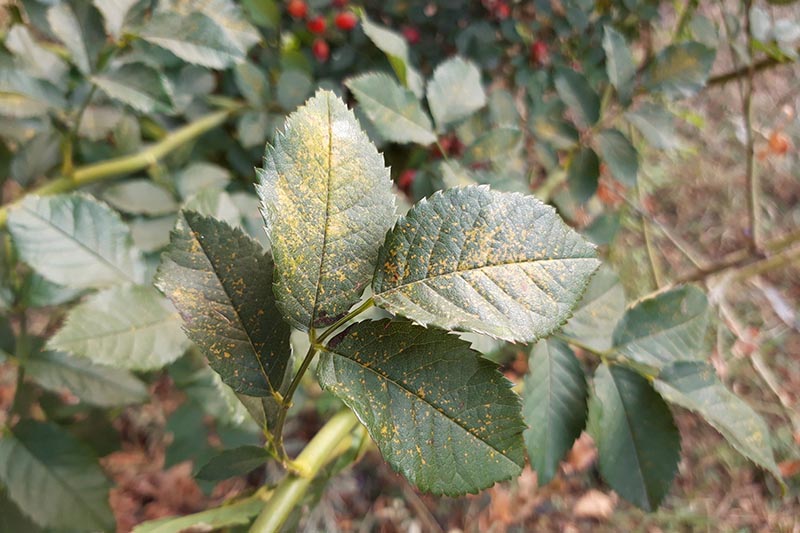
It's relatively easy to spot rust on your roses.
They'll oftentimes driblet leaves, and the status is obvious with its orange, rust-colored marks that appear on leaves and canes. In the winter, infected canes tend to turn black.
Rust overwinters in infected tissue, just it can also notice a safe hiding spot on trellises and fences, or but about any place virtually the host rose where information technology is offered some protection from the worst of the winter conditions.
Luckily, this fungal issue is specific to roses, so it should only pose a potential threat to the other roses in your garden.
Treatment Rust
As is the instance with many plant diseases, a thorough and attentive watering regimen is key to solving your rust issues.
Remove fallen leaves every autumn and as an early on spring cleanup projection to assist minimize the spread of this fungal disease.
If you're in the planning stage of your garden pattern, consider purchasing rust-resistant rose varieties to dramatically minimize your chances of encountering this annoying problem.
If you opt for chemical control, consider using Bayer Advanced Disease Control instead of a combination fungicide and insecticide.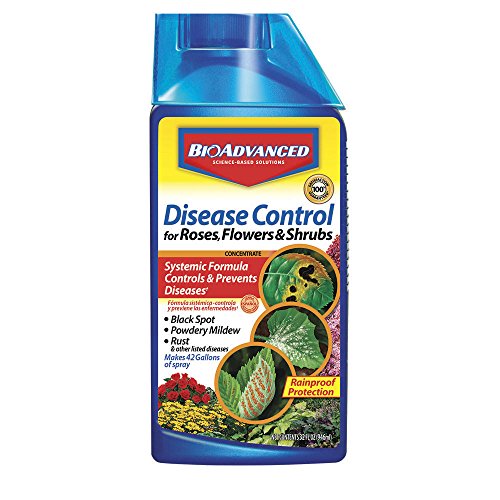
Bayer Advanced Affliction Control for Roses
This is a reliable and readily available over-the-counter choice, and you tin detect it on Amazon.
Powdery Mildew
If yous're growing roses, you've probably encountered powdery mildew before. It leaves a telltale… well, powdery mildew on the leaves, a greyness blanket that screams "yuck!"
It'south unremarkably spotted in a diversity of plants in the garden, and becomes an nigh abiding badgerer in belatedly summer and early fall.
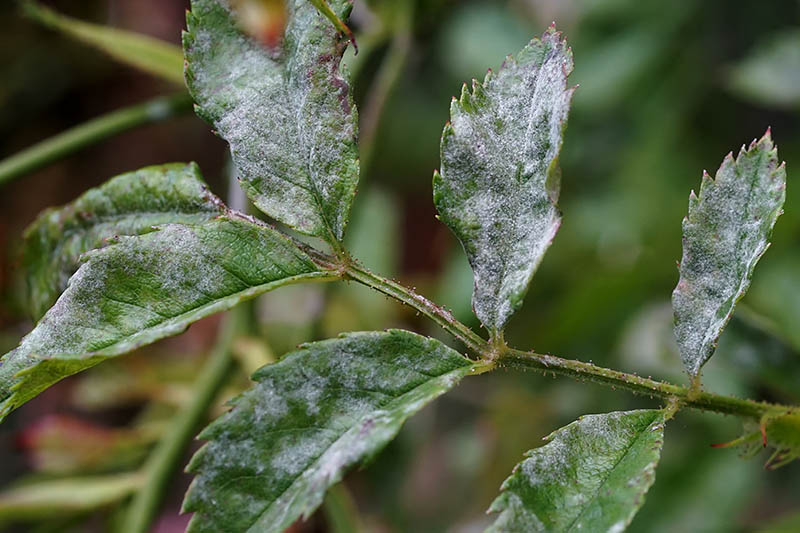
This fungal disease thrives in humid weather condition where airflow is minimal or nonexistent. Sounds like every summertime 24-hour interval in Philadelphia, if you inquire me!
Even so, information technology tin can likewise thrive in dry weather, and that'southward what makes powdery mildew such a headache. You just never know when it's gonna strike.
If information technology's a small-scale instance of powdery mildew, I tend to permit it go unmended, but will pay close attention to infected pants to ensure the disease doesn't spread.
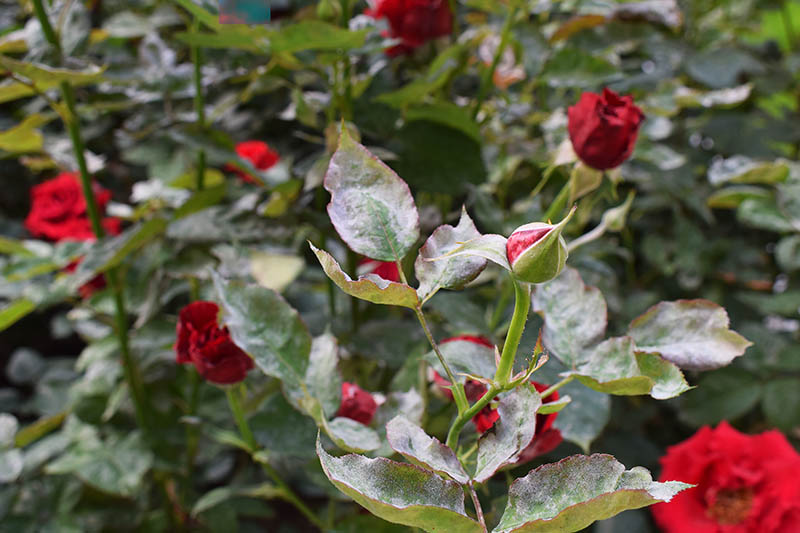
Oftentimes this is an issue that will accept intendance of itself in minor cases.
A thorough autumn cleanup of all shed leaves is a helpful trick to minimize whatsoever recurrences.
Treatment Powdery Mildew
Either of the fungicides recommended for the previous fungal problems will aid to treat powdery mildew.
Make sure yous're spraying all parts of the constitute, including the tops and bottoms of leaves, on a regular schedule.
Some experts recommend an application every 2 weeks, but equally ever, read the characterization of your purchased chemic for its suggested usage.
Botrytis Bane
I remember watching some tea roses expectantly, eager to see their developing buds blossom into the lovely flowers I've come up to love (and detest, depending on what fourth dimension of the year you ask me near it…) then furrowing my brow as the petals turned dark-brown and crispy.
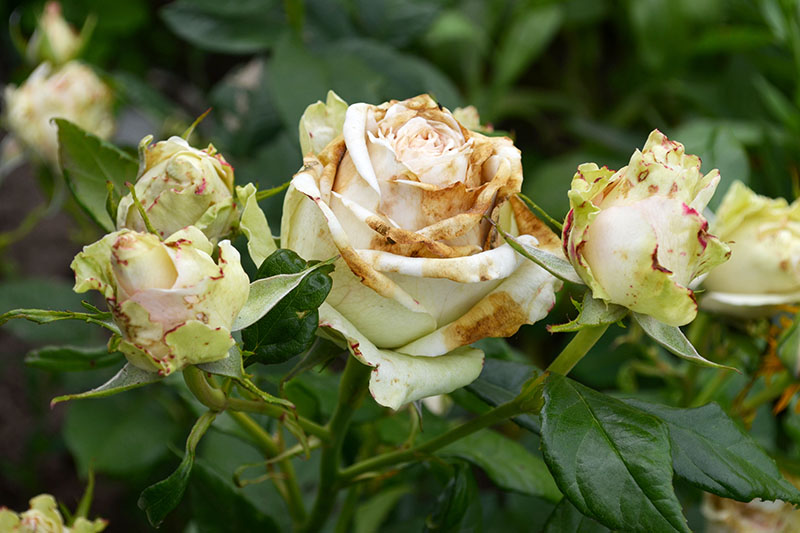
This was my first see with botrytis blight, an awful and ugly disease that most often attacks tea roses, ruining their blooms.
Like most fungal issues, this one is acquired largely by ecology problems, so a hot and humid summer is the perfect convenance ground for this disease.
Handling Botrytis Blight
While botrytis blight can exist controlled temporarily with fungicides, it often adapts a resistance to these sprays and makes them ineffective after prolonged utilise.
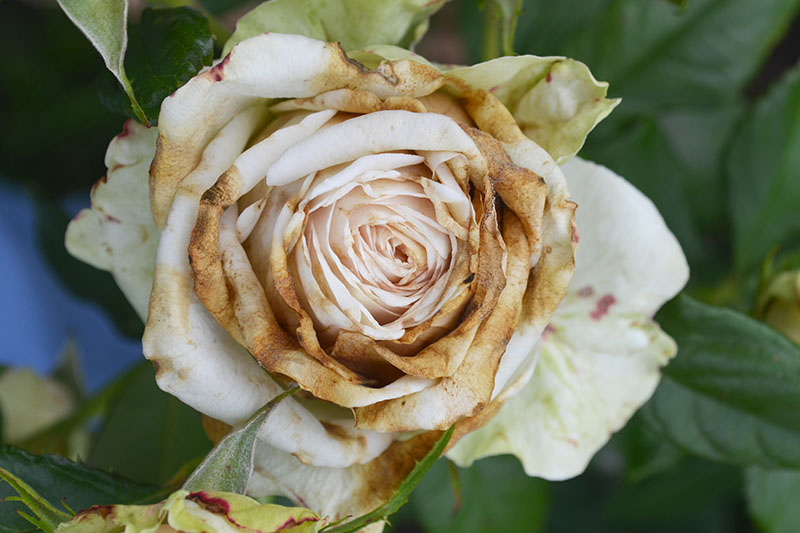
Sunny, dry out atmospheric condition is often plenty to keep this status under control.
An interesting solution to handling botrytis bane rests in your fertilization practices.
Too much nitrogen tin can create an abundance of new, soft growth that is overly susceptible to this blight.
Limit any midsummer feeding y'all provide to your roses to help minimize the risk of blight attacking that new growth.
Cankers
This one is an ugly, potentially fatal fungal infection for your roses.
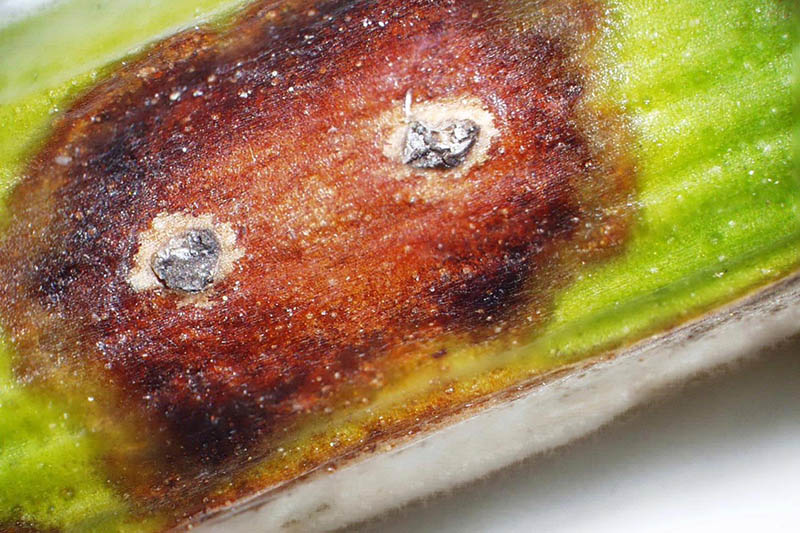
Canker reveals itself past turning the canes black, well-nigh notably in locations where the establish was recently pruned.
Ever clean your pruners between different plants to prevent this from happening!
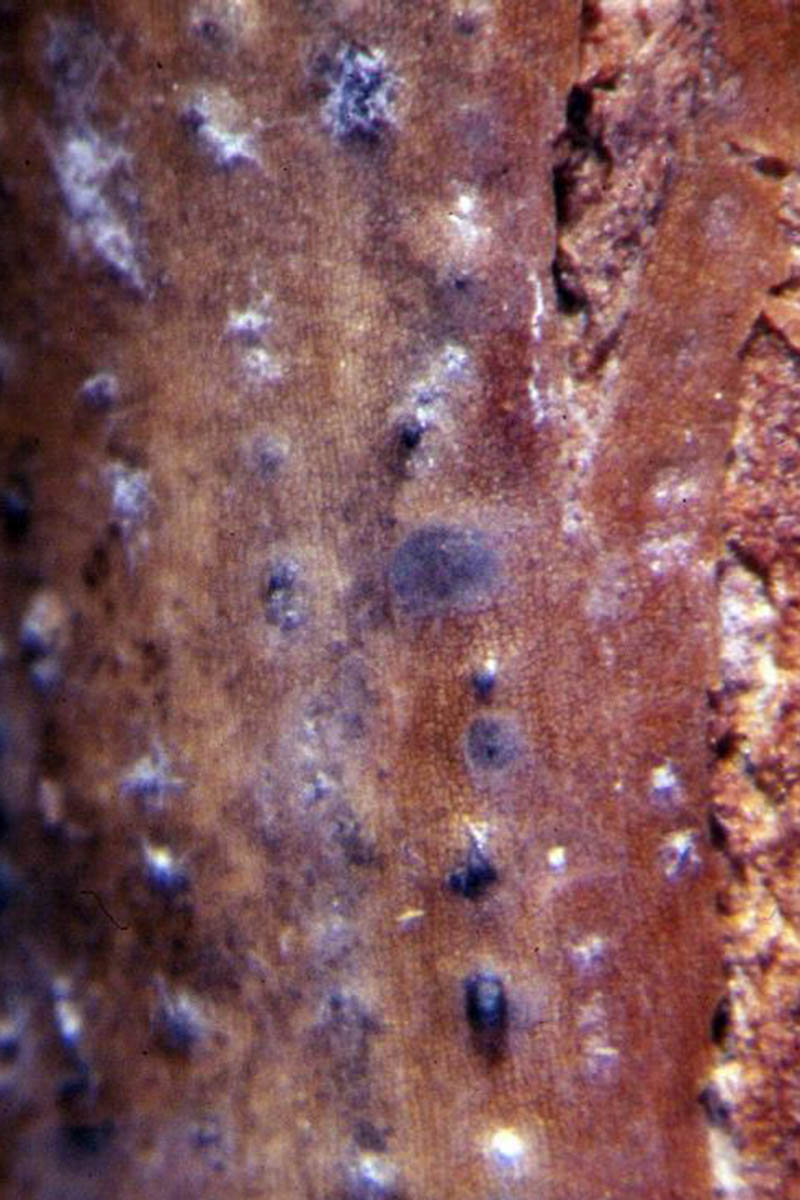
Interestingly, cankers often cause the most trouble during the colder periods of the year, making them a bit more difficult to notice than other diseases.
I've encountered them during early springtime pruning, either by discovering old cankers, or noticing new ones taking hold.
Roses are susceptible to three types of canker:
ane. Brown Herpes
You'll find tiny, raised, ruby-regal bumps on the canes, a little less than half the size of a grain of rice. Every bit these lilliputian spots brainstorm to mature into their fruiting bodies, they develop a chocolate-brown or black colour.
2. Brand Herpes
These have a similar blood-red color as the brown variety, also establish on the canes, but these cankers quickly develop a brown center. I've yet to see a make canker without that brown central coloration.
iii. Stem Herpes
Sometimes harder to spot at a glance than the others, stem canker tends to have a yellowish color, but information technology can also swing towards the reddish slice of the color wheel. This type of herpes shows upward on the bawl.
Handling Cankers
Using clean, sharp pruners, remove the infected tissue and canes.
I've seen people cut two to 3 inches below the infected tissue, but I go further than that if it's a widespread issue, sometimes removing 75% of an infected stem.
Cut into the healthy, green area of the plants, and follow upwardly with a fungicidal treatment to requite your roses an added boost confronting reinfection.
Preventing cankers is surprisingly easy: mulch their roots to forbid the plants from getting too common cold in the winter, and make sure you provide adequate amounts of fertilizer.
Crown Gall
As we've moved through this list, we've talked about rose diseases in order of their severity, so you lot know crown gall is serious business organisation.
It'due south also one of the virtually hands identifiable of all rose diseases.
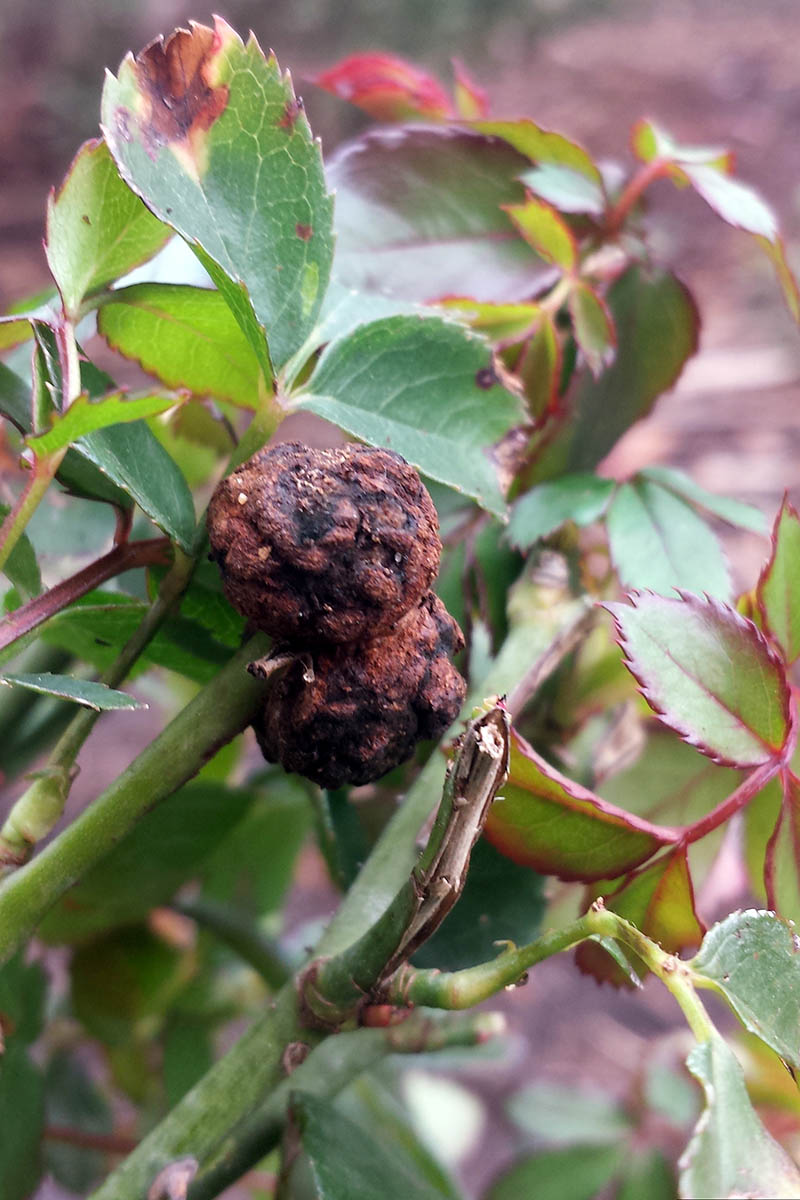
Crown gall is an ugly, weird-looking growth of tissue that looks like a mix between a encephalon, a praying mantis nest, and a head of cauliflower.
It can be a smaller mass of tissue or a larger ane, and can occur near anywhere on the rose, but it almost always develops near the soil level or crown of the institute.
Information technology is acquired by a bacterium (Agrobacterium tumefaciens, for the Latin lovers) that enters wounded tissue.
Though it's easy to place once yous spot it, almost of the fourth dimension, this disease is non noticed until weeks after the date of infection.
Handling Crown Gall
Well, this one is simultaneously easy and sorry: remove the infected plant and destroy it, and exercise not plant another rose in this location for two years.
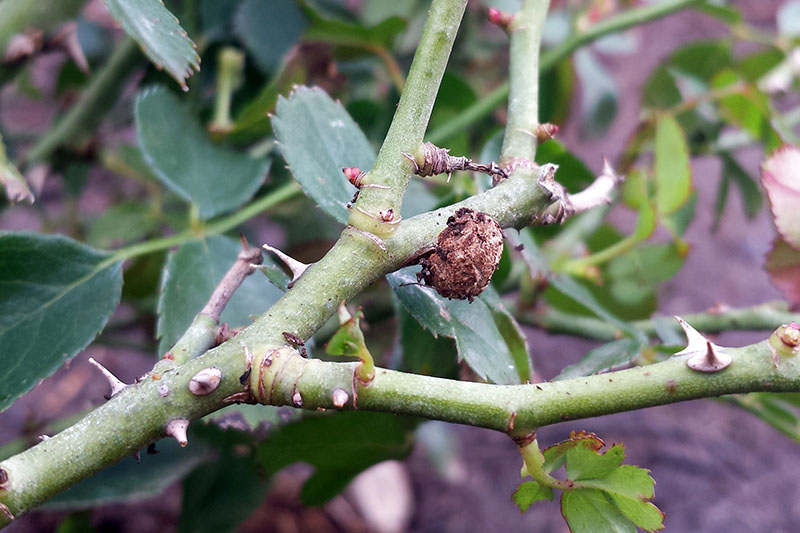
The goal here is to become rid of any residual leaner in the soil, and any of the original rose's infected roots, earlier replanting in that area.
Treatments are available to dull the growth of a crown gall and to minimize its harm, only these efforts will not impale this infection.
Treatment merely slows the progress of the disease and is not recommended.
Rose Rosette
In my opinion, this is the saddest-looking disease a plant could possibly develop.
Information technology's as if the concrete traits of rose rosette affliction were meant to twist and warp a rose just enough that it's withal beautiful, but in a very ugly way.
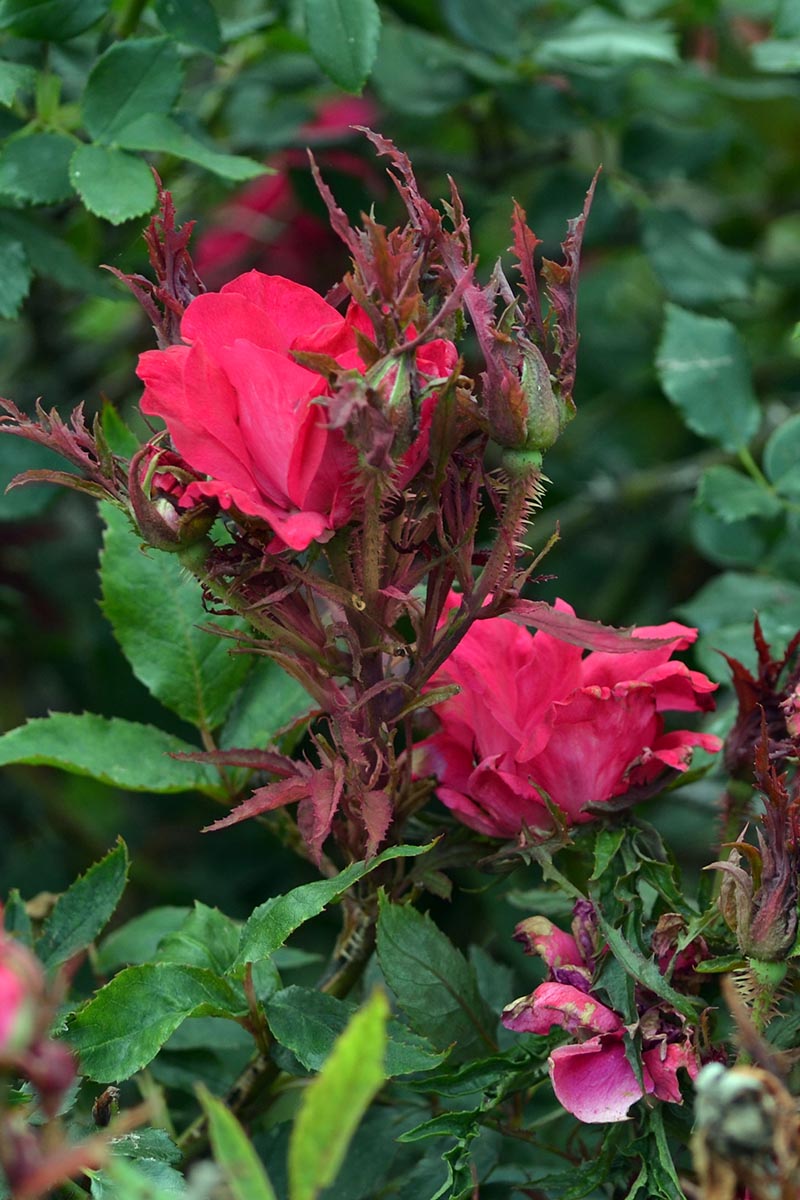
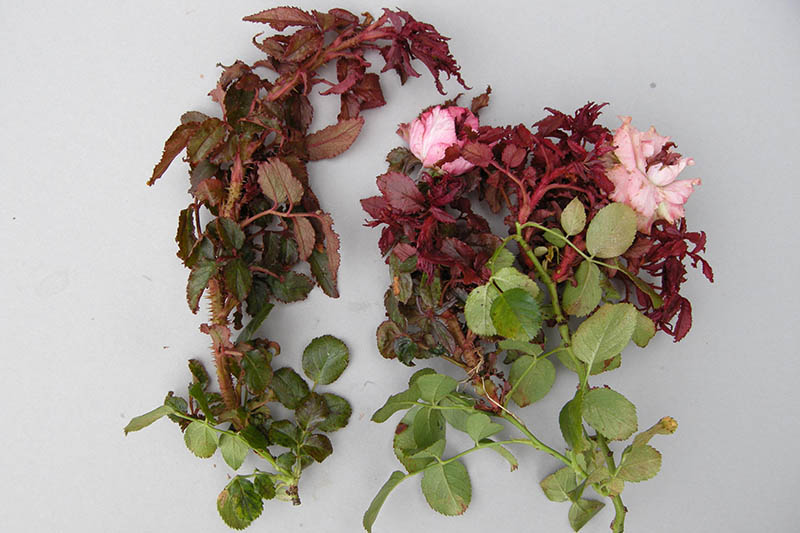
You'll find this disease, which is spread by a virus-carrying mite, when you see the telltale bizarrely cerise growth of the found.
Other early symptoms include deformed and brittle leaves with yellowish and reddish pigmentation.
As the disease progresses, the rose develops smaller leaves and vibrant red shoots.
You'll as well notice a dramatic increment in the number of thorns on the stems of your roses.
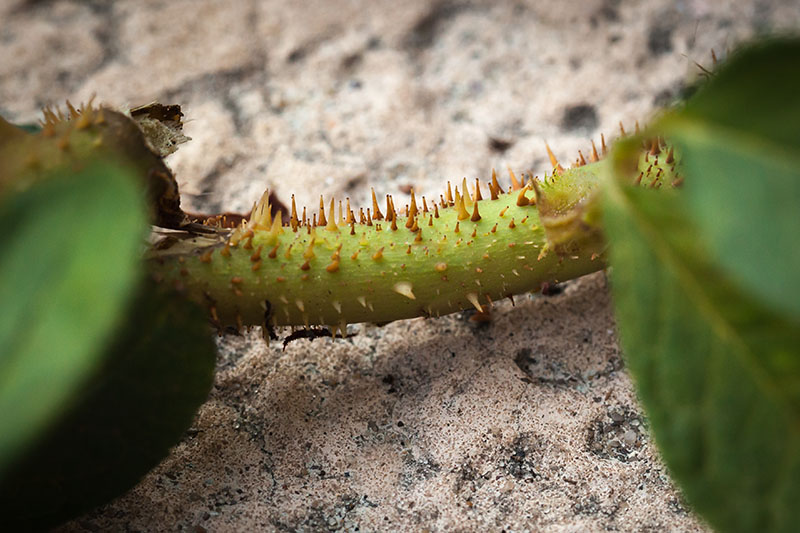
They will come up to wait like something more akin to a wild bramble than your favorite rose.
This illness spreads throughout the summer equally the mites travel on the air current and infect new plants, laying eggs over a thirty-solar day period.
Treatment Rose Rosette
Rose rosette tends to infect wild roses far more readily than cultivated ones, but anything in the genus Rosa is susceptible.
It's recommended that you institute your roses as far away from wild roses as you can, to avoid transmission.
Prune your roses difficult each year (I prune mine on the first decent days of early bound), cutting dorsum as much as 70% of terminal year's growth.
This helps remove any overwintering mites and potentially infected tissue.
You can as well utilise insecticidal soap, but be warned that these chemicals kill almost any insect they come into contact with, including natural predators that feed on the mites.
If you've got a plant that is infected with rose rosette illness, you only have one real option for command: destroy the institute and burn it, or place it into a plastic handbag and dump it with the garbage.
I'd recommend bagging the plant earlier removing it, to forbid spreading the mites as you lot carry it around the yard.
Source: https://gardenerspath.com/how-to/disease-and-pests/common-rose-diseases/
0 Response to "what causes rose bush stems to turn black"
Postar um comentário